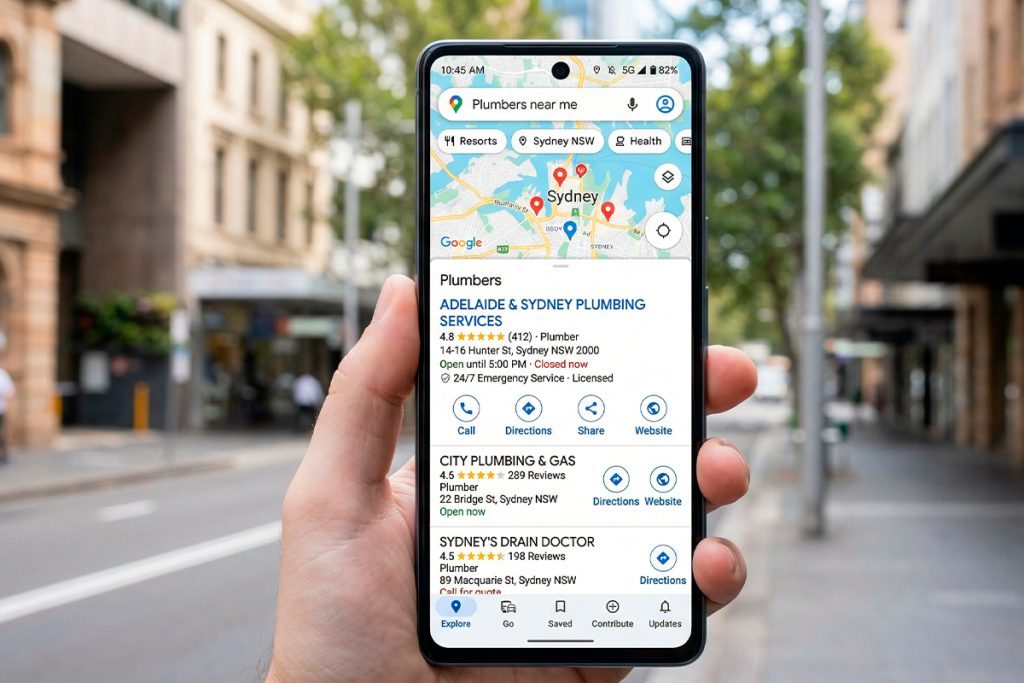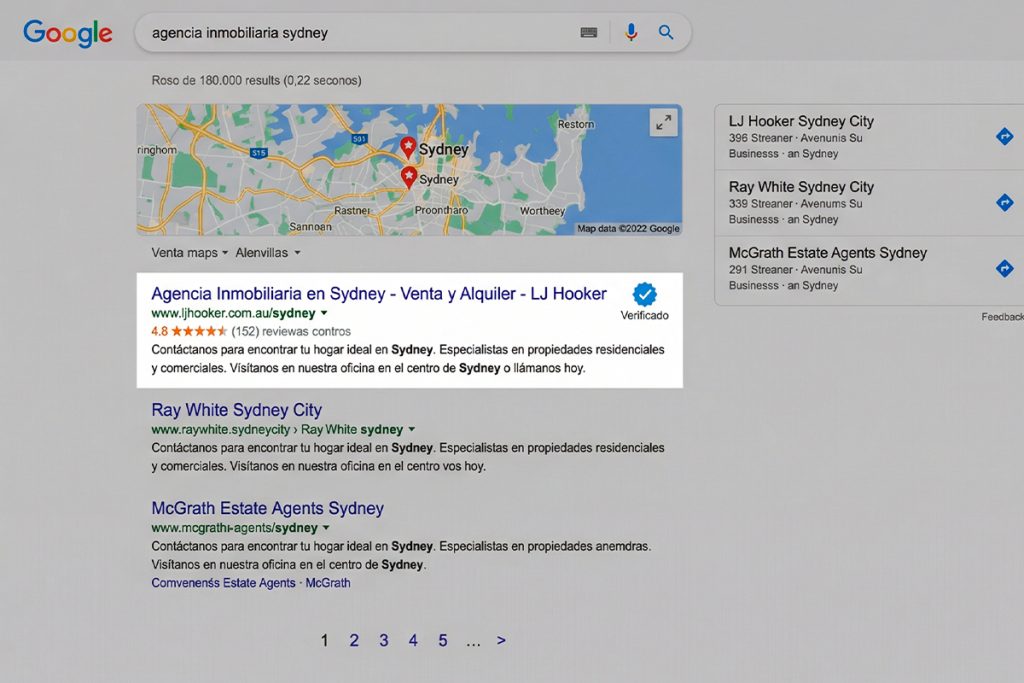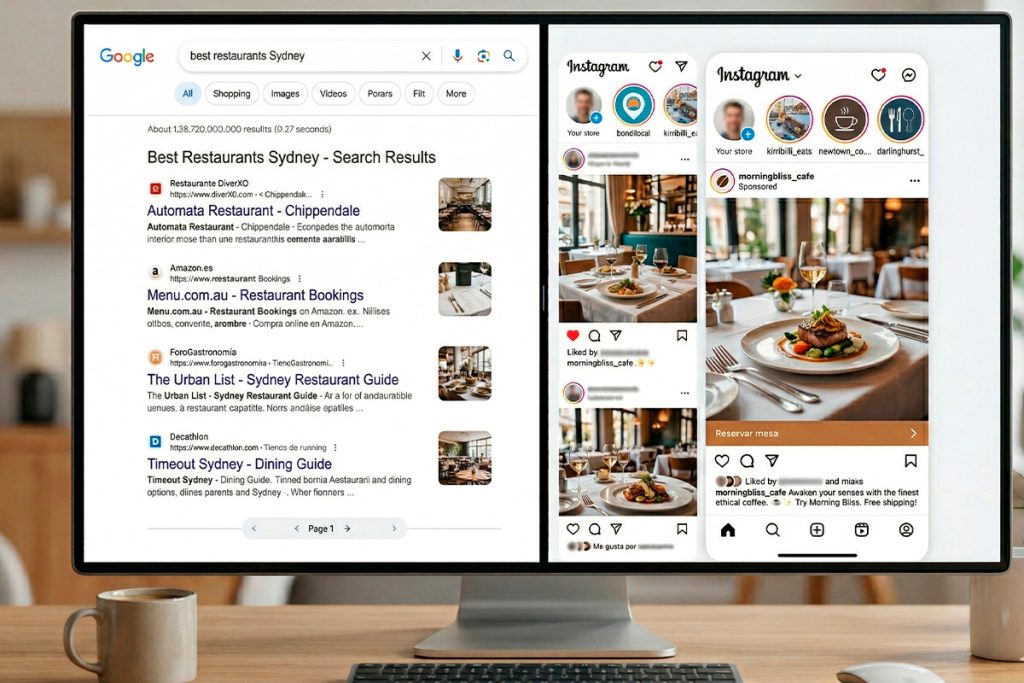
Google Ads captures guests who are already looking. Meta Ads reach guests who aren’t looking yet — but would book tomorrow if the right property landed in their feed at the right moment.
For boutique hotels in Australia, that distinction matters. A guest planning a weekend away doesn’t always start with a Google search. Sometimes they start with an Instagram Reel that makes a property feel irresistible, save it for later, and book two weeks after first seeing it. Meta Ads are how you become that property — for the guests most likely to love what you offer.
This guide covers how to run Meta Ads for hotels properly: who to target, what creative actually works, and how to structure campaigns that drive direct bookings rather than just impressions.
Why Meta Ads work differently for hotels than other channels
Meta Ads — Facebook and Instagram advertising — operate on a fundamentally different logic than search advertising. They interrupt. They appear in a feed the guest wasn’t using to look for accommodation. They have about one second to earn attention before the thumb moves on.
That sounds like a disadvantage. For hotels with strong visual identities, it’s actually an opportunity. A boutique property with exceptional photography, a distinctive atmosphere, and a clear sense of place can stop a scroll in a way that a text-based Google ad simply can’t.
The other structural advantage of Meta Ads for hotels is audience building over time. A guest who sees your property on Instagram in January, saves the post, sees a remarketing ad in February, and books in March for an April stay is a direct booking you would never have generated through search alone — because they weren’t searching. They were inspired.
Step 1: get clear on who you’re trying to reach
Meta’s targeting options are detailed enough that vague audience definitions waste budget fast. Before building any campaign, get specific about who your ideal guest is.
For most boutique hotels in Australia, useful audience segments include couples planning weekend escapes within a two to four hour drive of the property, food and wine travellers if your property has a strong dining or cellar door offering, families if your property suits them, domestic travellers with demonstrated interest in boutique or independent accommodation, and — for properties in destination locations — interstate travellers from specific cities.
Each of these segments needs different creative, different copy, and different timing. A couples weekend escape campaign looks nothing like a food and wine getaway campaign, even if both are pointing to the same property. Build them separately.
Step 2: structure your campaigns correctly
Most hotels running Meta Ads for the first time make the same structural mistake: one campaign, one audience, one ad. When it doesn’t perform, they conclude that Meta Ads don’t work for hotels.
A properly structured hotel Meta Ads account has three campaign types running simultaneously.
Prospecting campaigns
These reach new audiences — people who don’t know your property exists. Use interest-based targeting (travel, boutique hotels, food and wine, weekend breaks), geographic targeting (the drive markets and interstate cities most relevant to your property), and demographic targeting (age ranges and household income levels that align with your price point).
Prospecting campaigns build awareness. Don’t expect them to generate direct bookings at high volume — their job is to put your property in front of the right people for the first time. Measure them on reach, video views, and link clicks rather than direct conversion.
Remarketing campaigns
These reach people who have already interacted with your property — visited your website, watched a video, engaged with your Instagram, or abandoned a booking. These audiences convert at significantly higher rates than cold prospecting because you’re re-engaging guests who already showed interest.
A website visitor who looked at your rooms page but didn’t book is your highest-priority remarketing audience. Serve them a specific ad — ideally featuring the room type they viewed, a “book direct and save” message, and a direct link to your booking page. The closer the ad is to what they were looking at, the higher the conversion rate.
Lookalike campaigns
Upload your direct booking customer database to Meta Ads Manager and build a lookalike audience — Meta identifies users who share characteristics with your existing guests. A 1% lookalike of your past direct bookers in your primary drive market is one of the most cost-efficient prospecting audiences available for a boutique hotel with an established direct booking history.
Step 3: create content that earns the scroll-stop
In Meta Ads, creative is everything. The targeting determines who sees your ad. The creative determines whether they stop.
For boutique hotels, the creative formats that consistently perform best are short-form video and Reels, property walkthrough clips, and high-quality single-image ads of hero spaces or signature experiences.
What works in hotel Meta Ads creative
Natural light. Drone footage of the property and surrounds. The dining room at golden hour. A bedroom with the curtains catching morning light. These images trigger aspiration — they make a guest picture themselves there.
Short captions with a clear emotional hook. “Your next escape is closer than you think” with a weekend package offer. “Wake up to this” above a sunrise photo from a guest room window. “Book direct and arrive to a bottle of local wine” — a specific, tangible benefit that justifies clicking through.
Reels of 15–30 seconds tend to outperform static images on Instagram currently. A slow walk through the property, or a 20-second compilation of the best visual moments — room, view, food, setting — scored to a track that matches the mood of your brand, consistently generates more reach and lower cost per click than static imagery.
What doesn’t work
Stock photography. Overproduced corporate-looking video. Ads that lead with price. Copy that tries to say too many things at once. Creative that could belong to any hotel rather than specifically yours.
The best hotel Meta Ads creative feels like a post from a guest who loves the property — not an advertisement from a property trying to fill rooms.
Step 4: build seasonal and occasion-based campaigns
Boutique hotel occupancy follows a predictable pattern — peak weekends, school holidays, long weekends, and shoulder periods that are harder to fill. Meta Ads are particularly effective for driving occupancy during the periods that need it most.
Build a campaign calendar around your occupancy pattern. Three to four weeks before a long weekend, launch a campaign targeting your primary drive market with a specific package — a two-night stay with breakfast, a midweek escape offer, a “last rooms available” urgency message for the final week before the date.
Occasion-based campaigns — Valentine’s Day, anniversaries, Mother’s Day, Christmas — work especially well on Meta because the platform’s targeting lets you reach users whose relationship status, life events, and interests align with the occasion. A Valentine’s Day campaign targeting couples in Sydney within three hours of your Southern Highlands property, served two weeks before the date with a “celebrate somewhere beautiful” message, is the kind of targeted reach that no other channel offers at comparable cost.
Step 5: set up tracking before spending anything
Meta Ads without proper tracking are an expensive guessing game. Before launching any campaign, install the Meta Pixel on your website and configure it to fire a conversion event when a guest completes a direct booking — specifically, when they land on your booking confirmation page.
Without this, you can’t tell which campaigns, audiences, or creative executions are generating bookings versus clicks that go nowhere. You’ll optimise toward the wrong signals — typically impressions or link clicks — and wonder why the bookings aren’t following.
Your web developer can install the Pixel in under an hour. If your booking engine is on a separate domain, you may need a server-side Pixel implementation — ask your booking platform provider whether this is supported.
Once tracking is in place, set your campaign objectives to “conversions” rather than “traffic” or “reach.” Meta’s algorithm will then optimise delivery toward users most likely to complete a booking rather than most likely to click or watch.
Step 6: what to budget and what to measure
For a boutique hotel running Meta Ads for the first time, a starting budget of $25–40 per day across all campaigns gives enough volume to gather meaningful data within 30 days. Split roughly: 50% to prospecting, 30% to remarketing, 20% to lookalike campaigns.
Scale budget on campaigns where cost per direct booking is below your average OTA commission equivalent. If your average room rate is $280 and your OTA commission is 18%, you’re paying $50 per booking through Booking.com. A Meta Ads campaign generating direct bookings at $30 each is very profitable at those numbers — increase the budget.
The metrics that matter: cost per direct booking, return on ad spend, and direct booking share over time. Ignore reach and impressions except as diagnostic signals. A campaign with high reach and low bookings has a creative or audience problem. A campaign with low reach and high bookings is a scaling opportunity — increase the budget and watch whether efficiency holds.
What a realistic Meta Ads result looks like for a boutique hotel
A 25-room boutique hotel in a regional destination location, running a structured Meta Ads campaign with a $35 per day budget across prospecting and remarketing, typically sees the following over a 90-day period: direct booking share increases by 10–15 percentage points, cost per direct booking sits between $18–35 depending on season and creative quality, and OTA dependency reduces meaningfully as the remarketing audience builds and compounds.
The compounding effect is worth noting. A remarketing audience grows over time — every visitor to your website, every Instagram video viewer, every past campaign click adds to the pool. A Meta Ads campaign that costs $35 per day in month one is reaching a larger, warmer remarketing audience in month six, often at lower cost per booking as the algorithm optimises toward proven converters.
Ready to see what Meta Ads could do for your property?
At DIGISAP, we manage Meta Ads campaigns for boutique hotels across Australia — from campaign structure and audience setup to creative strategy and ongoing optimisation. If you’d like to see examples of hotel campaigns we’ve run and talk through what’s realistic for your property, we’d be happy to walk you through it.