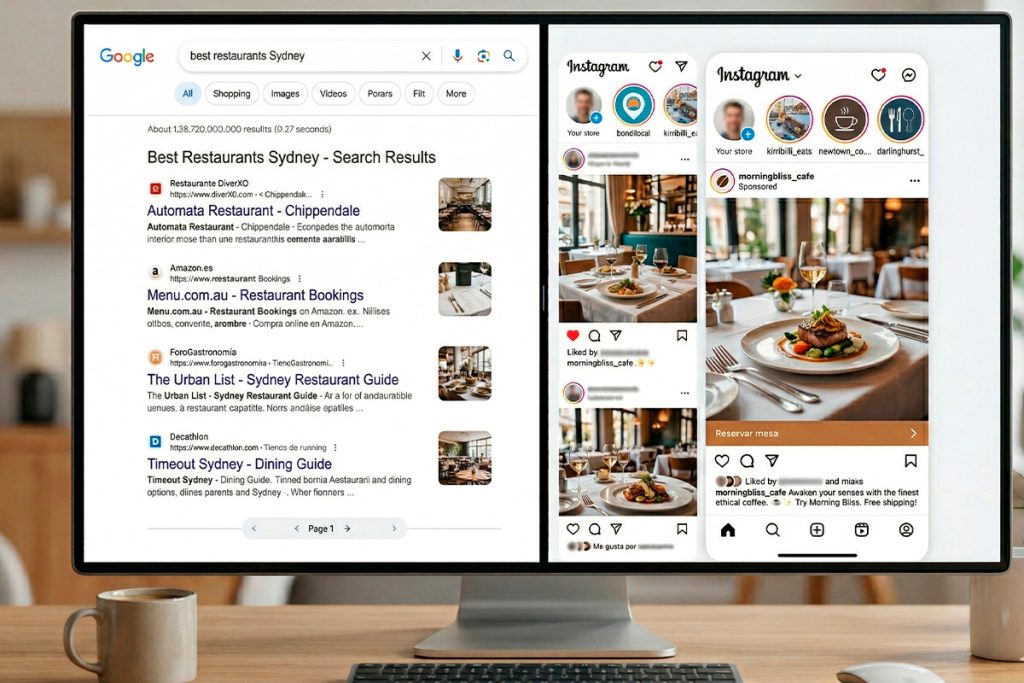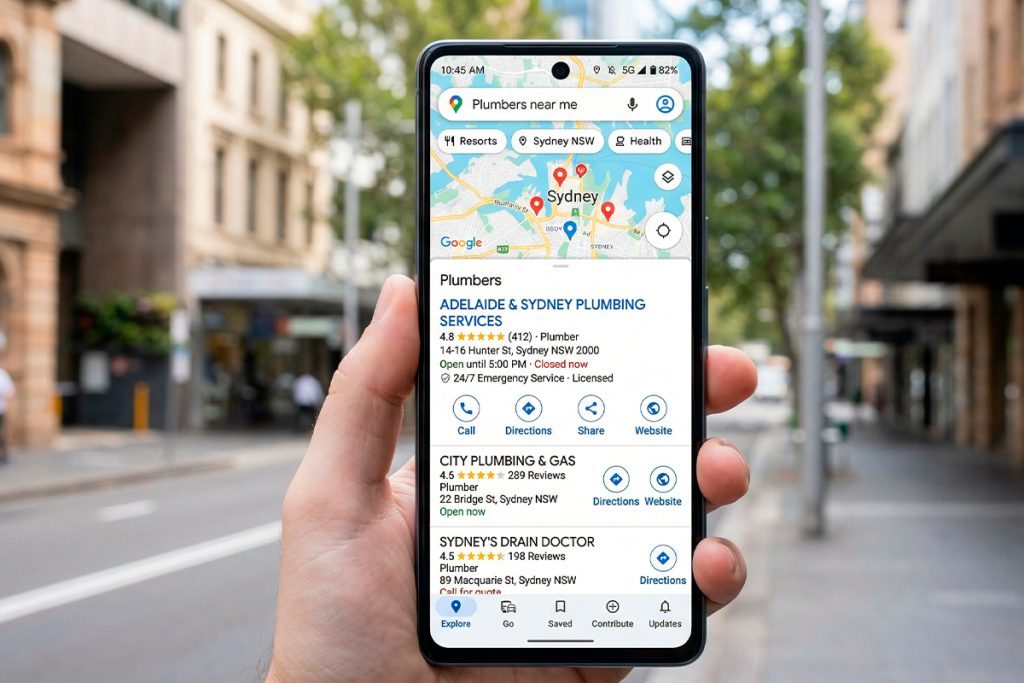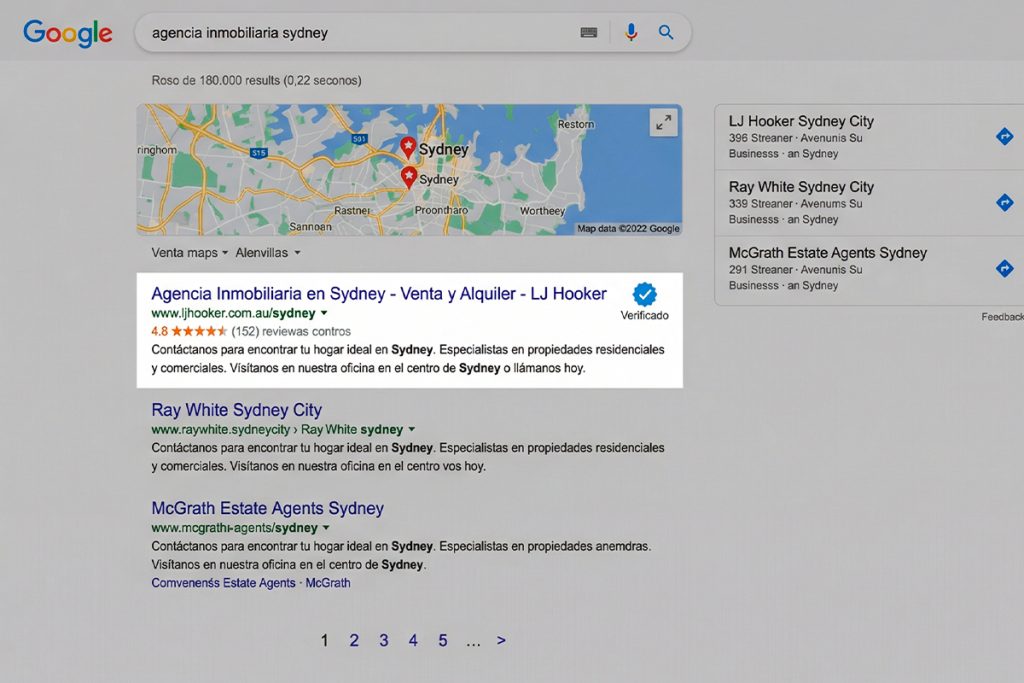
Every business owner running digital advertising in Australia eventually asks the same question: Google or Meta?
The answer — predictably — is that it depends. But “it depends” is only useful if you understand what it depends on. This article breaks down exactly that: how each platform works, which types of businesses tend to get better results from each, and how to think about running both at once without wasting money on the wrong mix.
This isn’t a platform sales pitch in either direction. Both Google Ads and Meta Ads have genuine strengths and real limitations. Knowing which applies to your situation is worth more than any general recommendation.
The fundamental difference between the two platforms
Before comparing performance, it’s worth being precise about what each platform actually does — because they solve different problems.
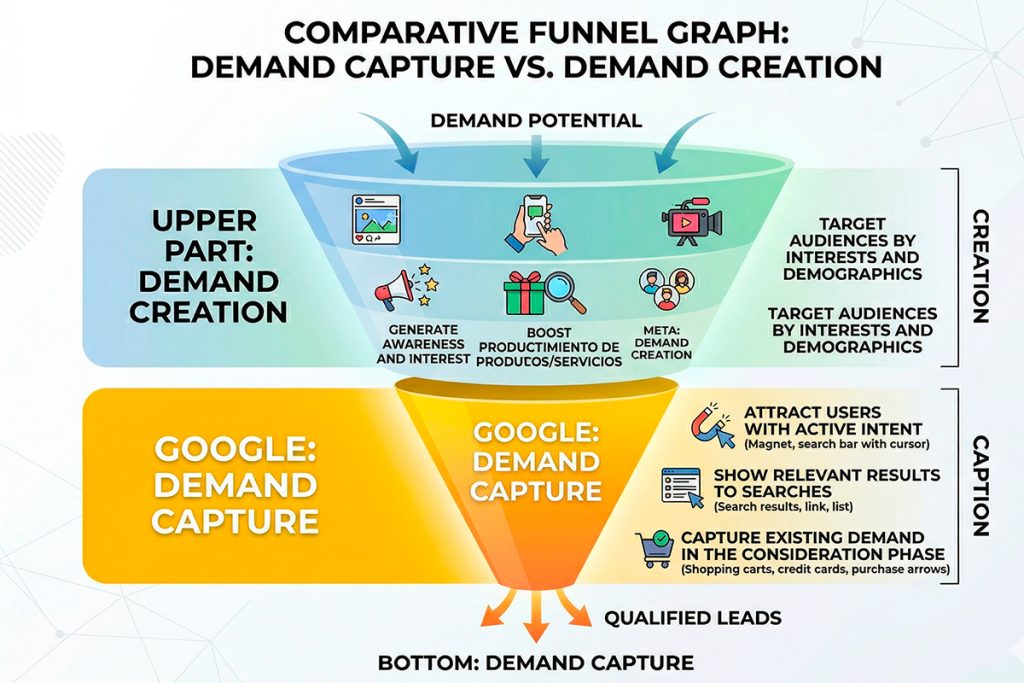
Google Ads captures demand that already exists. Someone searches “boutique hotel Byron Bay” or “bathroom renovation contractor Brisbane.” They have a specific need, right now. Google Ads puts your business in front of that person at that exact moment. You’re not creating desire — you’re intercepting it.
Meta Ads create demand that doesn’t exist yet. Someone is scrolling Instagram. They weren’t thinking about a weekend away or a kitchen renovation. Your ad appears. If the creative is compelling enough, they stop, engage, and eventually — maybe days or weeks later — become a customer. Meta Ads work upstream of the buying decision.
That distinction shapes everything else. It explains why Google Ads typically generates faster results with higher immediate conversion rates, while Meta Ads build brand awareness that compounds over time. Neither is better in the abstract. They’re better for different things.
How each platform performs by industry
Hotels and accommodation
Google Ads is the stronger direct booking channel for boutique hotels. Search intent at the bottom of the funnel — “book boutique hotel Hunter Valley this weekend” — is high-value and high-converting. Branded Google Ads campaigns that intercept guests searching for a hotel by name consistently deliver the best return on ad spend of any paid channel.
Meta Ads play a different role for hotels: awareness and inspiration. A guest who discovered your property through an Instagram Reel, saved it, and booked three weeks later wouldn’t show up in your Google Ads attribution — but the booking exists because of Meta. For properties with strong visual identities, Meta Ads are particularly effective for building the consideration pool that Google Ads later converts.
For most boutique hotels, the right answer is both — Google Ads for direct booking capture, Meta Ads for awareness and remarketing — with budget weighted toward Google (roughly 60/40) unless the property has exceptional visual assets that make Meta creative unusually effective.
Restaurants and fine dining
The split is similar for restaurants, with some nuance. Google Ads excels at capturing occasion-based searches — “anniversary dinner Melbourne,” “degustation menu Sydney Saturday” — where the guest has a specific date and intent. These campaigns convert at high rates and fill seats on the nights that need it most.
Meta Ads work better for restaurant discovery and event promotion. A new seasonal menu launch, a wine dinner event, or a midweek offer benefits from the visual and social nature of Meta’s platform. Short-form video of a signature dish being plated reaches potential guests in a way that a text ad simply can’t.
Fine dining restaurants with strong photography and a clear visual identity typically find Meta Ads highly cost-effective for building awareness in their city. Restaurants without strong visual assets tend to see better initial ROI from Google Ads alone.
Real estate
For real estate agents targeting domestic buyers, Google Ads is the primary channel — buyers actively searching for properties in specific suburbs convert at high rates and at meaningful commission values. The economics of real estate make even moderately expensive Google Ads leads very profitable.
For international investor campaigns, Meta Ads become significantly more important. Reaching buyers in Singapore, Hong Kong, or London before they’ve started searching for Australian property — and building familiarity with your agency over a long consideration cycle — is something Meta’s geographic and interest-based targeting does better than any other digital channel.
Real estate agencies targeting both domestic and international buyers typically need both platforms, with campaign strategy tailored to each audience segment separately.
Service businesses and construction
For trade, renovation, and professional service businesses, Google Ads is almost always the primary channel. Service buying is need-driven — when a homeowner’s bathroom needs replacing, they search. Being visible at that moment is worth far more than building ambient awareness through social media.
Meta Ads serve a supporting role for service businesses: local awareness campaigns that keep your brand visible in your service area between jobs, and remarketing to website visitors who haven’t yet enquired. The budget allocation for most service businesses should be heavily weighted toward Google — 70–75% — with Meta used for remarketing and brand awareness at a modest supplementary spend.
Comparing the mechanics: what each platform actually optimises for
Targeting
Google Ads targets based on what people search — intent signals that are highly predictive of purchase behaviour. You’re reaching someone in the act of looking for what you offer.
Meta Ads target based on who people are — demographics, interests, behaviours, and connections. You’re reaching people who match a profile associated with your ideal customer, regardless of whether they’re currently in market.
Neither is superior. Google’s intent targeting is more precise for immediate conversion. Meta’s profile targeting is better for reaching people before they’re in market, and for finding new audiences similar to your existing customers through lookalike campaigns.
Creative requirements
Google Search Ads are text-only — headlines and descriptions. The creative challenge is writing copy that matches search intent precisely and earns the click in a competitive results page. Visual brand identity is largely irrelevant.
Meta Ads are predominantly visual — images, video, and Reels. The creative challenge is producing content that stops a scroll in under one second and communicates your offer clearly enough to generate a click. A business without strong visual assets — professional photography, video, consistent brand aesthetic — will struggle to make Meta Ads work regardless of how good the targeting is.
Speed of results
Google Ads generate results faster. A well-structured campaign targeting high-intent keywords in a competitive market will produce leads within days of launching. There’s no extended brand-building phase before conversion events occur.
Meta Ads take longer to show meaningful return. The platform needs time to learn which users are most likely to convert, and campaigns targeting cold audiences require a build-up period before the algorithm optimises efficiently. Most Meta campaigns need four to six weeks before performance stabilises enough to evaluate accurately.
Attribution
Google Ads attribution is relatively clean — a guest searched, clicked your ad, and booked. The conversion event is traceable.
Meta Ads attribution is messier. A guest who saw your ad on Instagram, didn’t click, visited your website directly a week later, and booked through a Google search will typically not appear in your Meta Ads conversion data — even though Meta influenced the booking. Meta’s reported ROAS often understates actual impact for this reason, which makes comparing the two platforms on reported numbers alone misleading.
Cost comparison: what to expect in Australia
Cost per click and cost per conversion vary significantly by industry, location, and competition level. Some general benchmarks for Australian markets:
Google Ads cost per click typically runs $2–4 for lower-competition service categories, $4–10 for renovation and construction, $5–15 for real estate, and $1–3 for hospitality. Branded keywords are consistently cheaper — often under $1 — because competition is low.
Meta Ads cost per click is generally lower than Google — $0.50–2 across most categories — but the conversion rate from click to customer is also lower, because the audience isn’t actively in market. Cost per lead from Meta tends to be lower than Google for awareness-stage campaigns, and comparable or higher for direct conversion campaigns.
The comparison that matters isn’t cost per click — it’s cost per acquired customer. A $6 Google Ads click that converts at 25% produces a customer at $24. A $1 Meta click that converts at 3% produces a customer at $33. The cheaper click produced the more expensive customer.
Run the numbers for your specific industry and conversion rates before drawing conclusions about which platform is more cost-effective.
When to run both — and how to split the budget
The honest answer for most businesses in DIGISAP‘s client sectors is that both platforms have a role — just different roles.
Google Ads handles the bottom of the funnel: people who are ready to book, enquire, or buy. Meta Ads handle the top and middle: people who need to discover you, consider you, and be reminded of you. Running only Google Ads means you’re capturing existing demand but not building the pool of future demand that feeds it. Running only Meta Ads means you’re building awareness but potentially missing the high-intent buyers who are ready right now.
A reasonable starting allocation for a business new to paid advertising: 70% Google Ads, 30% Meta Ads. As Meta’s remarketing audience builds and campaigns optimise, that allocation can shift. Some businesses with strong visual identities and longer consideration cycles — fine dining restaurants, boutique hotels in destination locations — find a 50/50 split more effective over time.
What doesn’t work is running both platforms with the same creative, the same message, and the same objective. Google Ads and Meta Ads require different strategies, different creative, and different success metrics. Treat them as separate channels with complementary roles, not as interchangeable alternatives.
The question to ask before choosing
Rather than asking “which platform is better,” ask a more useful question: where is my customer when they’re most likely to decide to buy from me?
If the answer is “searching Google with a specific need” — Google Ads is your primary channel.
If the answer is “scrolling social media, open to inspiration, not yet looking” — Meta Ads become more important.
If both are true at different stages of the buying journey — and for most businesses they are — then both platforms have a role, and the question becomes how to allocate budget between them based on where your specific business gets the best return.
Not sure which is right for your business?
At DIGISAP, we analyse both channels for every client before making a recommendation — because the right answer genuinely varies by industry, location, price point, and visual brand strength. If you’d like an independent assessment of which platform mix makes most sense for your business, and what realistic results look like for each, we offer a free channel analysis with no obligation.